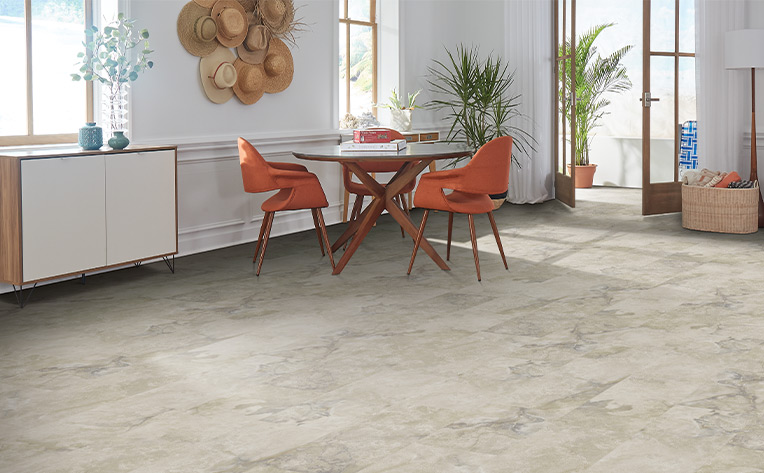
Luxury Vinyl Tile (LVT) flooring is a durable, multi-layer hard surface floor made to mimic the look of ceramic and stone. Its layered structure to deliver style, strength, and easy everyday performance. For homeowners who want a tile look that's low maintenance and comfortable, luxury vinyl tile is a smart, versatile option.
Rigid core strength: LVT flooring is built with a rigid core that helps resist dents, flexing, buckling, and warping, making it more durable than standard vinyl in busy areas of the home.
Luxury vinyl tile (LVT) flooring is a multi-layer hard surface floor built to handle real life. It starts with a rigid core that resists denting and flexing, topped by a high-definition design layer that recreates the look of tile including ceramic and stone looks.. A clear wear layer on top protects the surface from scratches, scuffs, and moisture.
What sets LVT apart from standard vinyl is its construction. Standard vinyl is thinner and more flexible, making it easier to damage over time. LVT's rigid core gives it the strength to hold up in busy spaces without buckling or warping.
Compared to ceramic tile, LVT delivers a similar look with everyday advantages. It's softer and warmer underfoot, less likely to crack from impact, and easy to install. Whether you're updating a bathroom, kitchen, or entryway, luxury vinyl tile flooring gives you the style you want with the durability your home needs.
LVT is water resistant, scratch resistant, and easy to maintain. It's warmer and softer underfoot than ceramic tile, installs over most subfloors with minimal prep, and works in nearly every room of the home including bathrooms, basements, and kitchens.
Yes. Luxury vinyl is thicker, more durable, and features a realistic design layer that mimics hardwood, stone, and tile. It's a stronger long-term investment for any flooring project.
Both are durable and water resistant. LVT is softer and warmer underfoot, easier to install, and less likely to crack from impact. Natural tile offers a harder surface and is fully waterproof. The right choice depends on your comfort preferences and how the room is used.
LVT is highly resistant to moisture, especially with a floating or click-lock installation. Clean up spills promptly and avoid prolonged standing water at seams or edges. See our Hard Surface Floor Care and Warranty Guide for full maintenance details.
Most LVT flooring is highly water resistant, with fully waterproof options also available. With correct installation and regular maintenance, it performs well in wet areas like bathrooms, kitchens, and entryways.
Most LVT installations can be completed in 1 to 3 days depending on room size and subfloor condition. Floating systems require no drying time, so the floor is ready to use immediately.
LVT works in nearly any room, including bathrooms, kitchens, basements, laundry rooms, entryways, and high-traffic areas. Its moisture resistance and durability make it one of the most versatile flooring options available.
LVT flooring is available at a range of price points, making it an accessible option for most budgets. The final cost depends on a few key factors: the product you choose, wear layer thickness, tile size and design, and professional installation. For a more detailed cost breakdown, visit us in-store or schedule an estimate, and we'll help you find the best option for your project.
LVT stands for luxury vinyl tile, a hard-surface flooring option engineered to mimic the appearance of natural stone and ceramic. Each tile is made up of several bonded layers, including a stabilizing core, a printed design layer that captures realistic texture and color, and a protective wear layer that shields the surface from daily use.
LVT is durable and low-maintenance, but it does have a few limitations. Extended direct sunlight can cause fading over time, and damaged tiles need to be replaced rather than refinished. While LVT handles moisture well, standing water left at seams or edges can eventually work its way underneath, so quick cleanup and proper installation are important.
Yes. Modern LVT features high-definition design layers, realistic embossing, and premium wear layers that closely mimic natural stone and hardwood. It's a common choice in upscale renovations and new construction.
Not always. Most luxury vinyl tile can be installed using a floating click-lock system, which requires no adhesive and allows for easier replacement. Glue-down installations are available and are often used in commercial settings or large open spaces.
Most LVT floors can last 15 to 25 years with proper care. Lifespan depends on wear layer thickness, foot traffic, and maintenance. Thicker wear layers hold up longer in busy households.
