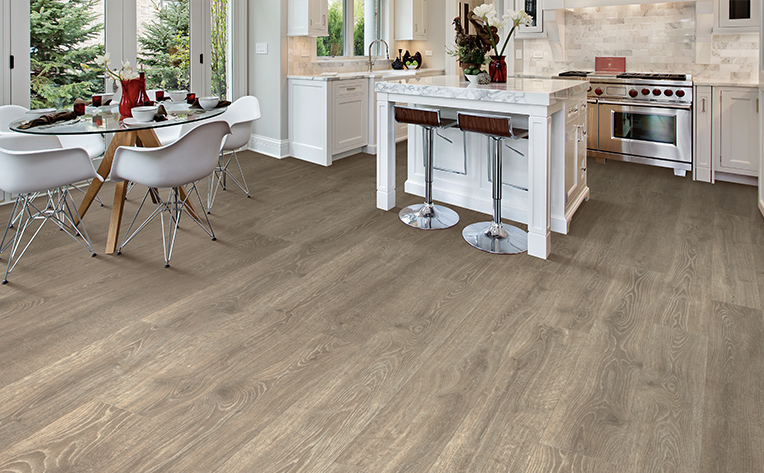
Waterproof and water-resistant are not the same thing, and choosing the wrong category for a high-moisture room is one of the most common flooring mistakes homeowners make.
Waterproof flooring can handle standing water, flooding, and prolonged moisture exposure without damage to the core. SPC vinyl and LVP are the most common examples.
When you're choosing flooring for a kitchen, bathroom, or any room where spills happen regularly, the difference between waterproof and water-resistant flooring matters more than you might think. Using the wrong type in the wrong room can lead to warping, buckling, and damage that's expensive to fix.
If you’re planning to install new floors in your space, we're here to help you navigate all your options. Read on to explore the differences between waterproof and water-resistant floors and find the perfect floor for your home.
Waterproof flooring can handle standing water, flooding, and prolonged moisture exposure without any damage to the core. It's the most durable option for high-moisture environments and the right choice anywhere water is a regular factor.
Water-resistant flooring holds up against everyday spills, but only if they're wiped up quickly. It's a practical option for lower-risk spaces where moisture isn't a consistent concern, but it has limitations when it's exposed to standing water or prolonged moisture.
There are a lot of flooring options out there, and many of them look similar on the surface. But when it comes to moisture, luxury vinyl, laminate, hardwood, and SPC perform differently.
Luxury vinyl flooring is one of the most popular waterproof flooring options available. Most vinyl floors, including luxury vinyl plank (LVP) and luxury vinyl tile (LVT), are built with a fully synthetic core that does not absorb moisture. That makes luxury vinyl a strong choice for any room in the home, including kitchens, bathrooms, basements, and laundry rooms.
Pro Tip: Even though the planks themselves are waterproof, proper installation is important. Seams that are not tightly fitted can allow water to reach the subfloor over time. In below-grade spaces like basements, a vapor barrier underlayment is also recommended.
SPC, or Stone Plastic Composite, is a type of vinyl flooring built with a thick, dense core. SPC is fully waterproof at the plank level, making it a strong choice for rooms where moisture is a regular concern. Its added density makes it one of the most rigid and durable flooring options available, and it gives the planks a feel closer to hardwood underfoot.
Because of its waterproof core and sturdy construction, SPC is often a top recommendation for homeowners who want the look of hardwood in a space where hardwood might be impractical.
Most laminate is water-resistant, not waterproof. Standard laminate has a wood-composite core that absorbs moisture when exposed to standing water or prolonged spills, which leads to swelling, buckling, and delamination. It holds up well against everyday spills as long as they are wiped up quickly, but it has limitations in high-moisture environments.
Pro Tip: always check the product specifications and water damage warranty before installing laminate in a kitchen or any other moisture-prone space.
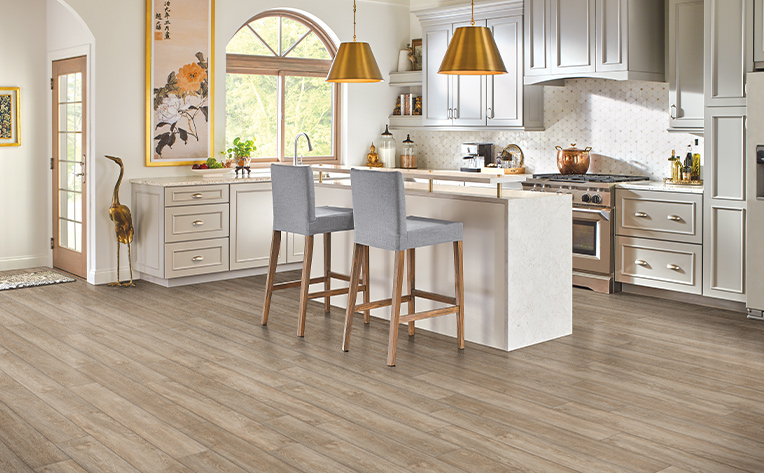
Traditional hardwood flooring is not waterproof. It's a natural material that absorbs moisture, which makes it vulnerable to warping, swelling, and long-term damage when exposed to standing water or high humidity. That said, some hardwood products use special treatments and finishes that improve moisture resistance, making them a more practical option than traditional hardwood in certain spaces.
Tired of trying to picture how a floor will look in your home? Our Room Visualizer takes the guesswork out of it. In just three simple steps, you can see exactly how any floor will look in your own space before you spend a dime. Take a photo of your room, browse and select a floor you love, and see it come to life right in front of you.
The right floor is out there. Now you can find it with confidence! Try our Room Visualizer tool today.
Explore our Room Visualizer Tool TodayTile and luxury vinyl are the top choices for bathroom flooring.
Luxury vinyl plank and luxury vinyl tile are the most practical waterproof flooring choices for kitchens. Both are fully waterproof, comfortable for long periods of standing, easy to clean, and available in wood and stone looks that suit most kitchen styles.
Tile is an equally waterproof option for homeowners who prefer a harder surface or a traditional aesthetic.
No. Waterproof flooring means the plank or tile itself will not absorb moisture or be damaged by it. However, water can still work its way through seams and gaps to reach the subfloor if the floor is not installed correctly.
Proper installation, tight seams, and the right underlayment are all important parts of making sure the full floor system performs as expected.
Yes, and it's often the best choice for below-grade spaces. Basements are prone to moisture from multiple directions, including from the ground below, so a waterproof floor with a vapor barrier underlayment is strongly recommended. SPC vinyl and LVP are both well suited for basement installations.
Check the product specifications, not just the marketing language. Look for a waterproof core rating and confirm whether the product is rated for installation in wet areas like bathrooms or basements. If the specs only mention surface-level water resistance, it is likely water-resistant rather than fully waterproof. When in doubt, ask your local flooring expert.
Water that reaches the subfloor can cause serious problems over time, including mold, warping of the subfloor, and damage to the structure beneath. If you notice water has gotten under your floor, it is important to address it quickly. Pull up the affected planks, dry out the subfloor thoroughly, and reinstall once everything is dry.
Now that you know the difference between waterproof and water-resistant flooring, you're already ahead of most homeowners walking into a flooring decision. The materials you choose for your floors can determine how your space looks and feels for years to come.
The best way to know if a floor is right for your space is to see it there. Colors and textures look different in your living room than they do in a showroom. That’s why we bring the samples to you. Order up to 6 free samples and see how they look with your furniture, your paint, and in your home’s natural light. Take your time, compare your favorites, and find the one that feels like home.
Don't leave your new floor to chance. Your dream home is just a click away! Order your 6 free samples today and find the perfect floor with confidence.
Order your Free Flooring Samples Today
Lorem ipsum dolor sit amet, consectetur adipiscing elit. In vitae elementum justo. Curabitur varius dolor a placerat facilisis. Sed ipsum quam, pharetra ut sapien in, scelerisque hendrerit felis. Aliquam vitae arcu eget leo tincidunt pulvinar.
Call To Action
Consectetur adipiscing elit. In vitae elementum justo. Curabitur varius dolor a placerat facilisis. Sed ipsum quam, pharetra ut sapien in, scelerisque hendrerit felis. Aliquam vitae arcu eget leo tincidunt pulvinar.
Consectetur adipiscing elit. In vitae elementum justo. Curabitur varius dolor a placerat facilisis. Sed ipsum quam, pharetra ut sapien in, scelerisque hendrerit felis. Aliquam vitae arcu eget leo tincidunt pulvinar.
Consectetur adipiscing elit. In vitae elementum justo. Curabitur varius dolor a placerat facilisis. Sed ipsum quam, pharetra ut sapien in, scelerisque hendrerit felis.
View Now Lorem ipsum dolor sit amet, consectetur adipiscing elit. In vitae elementum justo. Curabitur varius dolor a placerat facilisis. Sed ipsum quam, pharetra ut sapien in, scelerisque hendrerit felis. Aliquam vitae arcu eget leo tincidunt pulvinar.
Try Visualizer Lorem ipsum dolor sit amet, consectetur adipiscing elit. In vitae elementum justo. Curabitur varius dolor a placerat facilisis. Sed ipsum quam, pharetra ut sapien in, scelerisque hendrerit felis. Aliquam vitae arcu eget leo tincidunt pulvinar.
Try Visualizer Lorem ipsum dolor sit amet, consectetur adipiscing elit. In vitae elementum justo. Curabitur varius dolor a placerat facilisis. Sed ipsum quam, pharetra ut sapien in, scelerisque hendrerit felis. Aliquam vitae arcu eget leo tincidunt pulvinar.
Try VisualizerLorem ipsum dolor sit amet, consectetur adipiscing elit, sed do eiusmod tempor incididunt ut labore et dolore magna aliqua.